
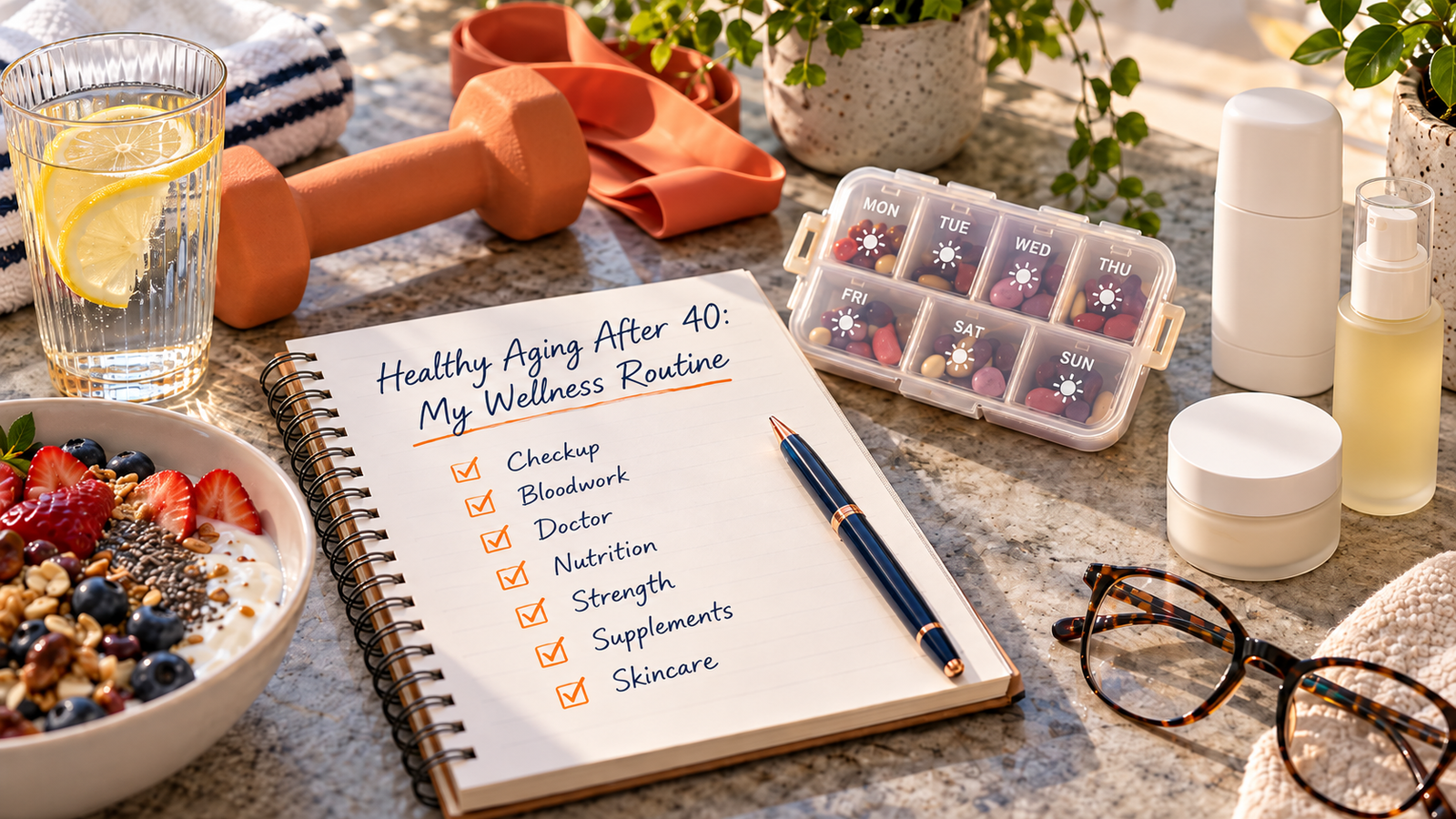
After 10 years as a certified personal trainer, I’ve learned that healthy aging involves much more than staying physically active.
At 48, navigating perimenopause has made me more attentive to my health. Strength training and good nutrition remain essential, but so do checkups, understanding my bloodwork, and adjusting my everyday routine. I’ve also been using hormone replacement therapy (HRT) under medical guidance for approximately two years.
Some recent assessments genuinely surprised me. They reminded me that before adding another supplement or wellness product, we need to understand what our bodies actually need.
1. Start With a Checkup, Not a Supplement
Even when we believe we’re doing everything right, our health markers may tell a different story. In just one year, my LDL cholesterol increased by nearly 30%, despite what I thought were appropriate nutritional habits. My A1c also came close to the prediabetes range, and diabetes runs in my family. These results made preventive care and follow-up even more important to me.
Your primary care clinician can review symptoms, family history, medications, and preventive screenings. An OB-GYN can help assess perimenopause symptoms and discuss treatment options, including HRT when appropriate. A registered dietitian can provide individualized medical nutrition therapy when it’s needed.
What I discuss about bloodwork
- Iron, ferritin, and CBC: Evaluate iron stores, red blood cells, and possible anemia, when indicated.
- Cholesterol and cardiovascular risk: A lipid panel includes LDL, HDL, and triglycerides. ApoB and Lp(a) may provide added information for selected patients.
- Blood sugar: Glucose and A1c can help assess diabetes risk, especially when family history is relevant.
- Thyroid: TSH is usually the starting point; Free T4 and sometimes T3 are considered when clinically indicated. Thyroid symptoms can overlap with perimenopause.
- Vitamin D and hormonal health: Testing should reflect symptoms, existing deficiencies, risks, and treatment history. Perimenopause is usually assessed clinically rather than through routine hormone panels.
2. The Scale Doesn’t Tell the Whole Story
Over the same year, my weight remained practically unchanged, but my body-composition assessment showed a 1.4% decrease in lean mass and a 1.4% increase in body fat. In other words, I seemed to be moving in exactly the opposite direction from my fitness goals: less lean mass, more fat, and almost no change on the scale.
Not exactly the progress I was training for. Thanks, perimenopause! 😅
Of course, hormonal changes aren’t necessarily the only explanation, and body-composition estimates have measurement limitations. Still, this was a useful reminder to look beyond body weight and keep prioritizing strength, nutrition, and meaningful follow-up.
3. Skin, Hair, and Bones: Why Care Changes After 40
Skin: Health and comfort, not just appearance
As we age, skin can become thinner, drier, and more fragile. Hormonal changes may affect hydration and elasticity, while accumulated sun exposure can contribute to pigmentation changes. Age-related changes can also slow wound healing.
My own skin has become more reactive. I’ve had small rash-like bumps around my neck and upper chest, and products I once tolerated don’t always feel right anymore. I can’t just use anything: my skin has simply become more demanding.
My priorities are gentle cleansing, moisturizing, and daily broad-spectrum SPF 30+ protection. A dermatologist can assess persistent rashes, suspected allergies, or new or changing skin spots rather than assuming every change is normal aging.
Hair: Different texture, different needs
My hair is now drier, thinner, and more prone to breakage. I no longer grab just any drugstore shampoo, because I pay more attention to what my hair and scalp need. That doesn’t mean the most expensive product is automatically best.
Well-chosen hair care can help with dryness and breakage, but persistent thinning deserves an evaluation. Hormonal changes, thyroid conditions, and nutritional issues are among the possible causes that a dermatologist can assess.
Bones: A reassuring result, and a reason to keep training
Estrogen changes around menopause can accelerate bone loss. This makes resistance training, appropriate weight-bearing movement, and adequate intake of calcium, vitamin D, and protein especially relevant.
I had a bone-density scan (DXA), and the results were excellent. As someone who designs workouts with bone health in mind, that was encouraging! It was also reassuring because I’ve dealt with knee discomfort and a grinding sensation during movement.
Bone density and joint cartilage are different things: a reassuring DXA result doesn’t rule out knee-joint problems, and it can’t prove which habit caused a good result. But it reinforced my commitment to training for strength and long-term function.
4. Nutrition and Supplements: What Do You Really Need?
As a NASM Certified Personal Trainer and Nutrition Coach, I work with general nutrition education and sustainable habits. Diagnosing deficiencies, interpreting laboratory results clinically, prescribing supplement doses, or treating medical conditions are outside my coaching scope.
Supplements are part of my own routine, but I don’t think more is automatically better. Omega-3 fatty acids, for example, are part of a balanced diet; calcium and vitamin D play important roles in bone health. Whether a particular supplement is useful depends on dietary intake, individual risk factors, current medications, and professional guidance.
Before adding a supplement, I ask: What need am I trying to address? Could food cover it? What evidence supports it? Could it interact with something I already take? Who will help me monitor whether it is appropriate?
For individualized decisions, I recommend speaking with a physician, registered dietitian, or pharmacist as appropriate.
5. Choosing Products That Fit My Lifestyle
My foundation remains strength training, cardiovascular exercise, mobility, balanced nutrition, sleep, and recovery. Personal care is another part of my daily routine, and I enjoy finding products that suit my changing needs.
When I lived in Germany, I discovered RINGANA and genuinely loved its skincare products. After moving to the U.S., I tried different alternatives but never found a skincare line I enjoyed quite as much. I’m excited to have the chance to revisit those favorites and explore its current hair-care and nutritional-supplement ranges.
My previous positive experience also inspired me to become an Independent RINGANA Partner. I may earn commissions from qualifying purchases. As with the other products I discuss on Training with Luciana, I’ll evaluate anything new individually and share only my genuine experience. My partnership does not change the importance of independent medical guidance for health conditions or supplementation decisions.
6. Your Healthy Aging After 40 Checklist
Use this as a practical starting point, not a one-size-fits-all prescription.
- Book a preventive checkup. Bring your symptom history, medications, supplement list, and family history.
- Review the right tests. Ask which markers are appropriate and how they have changed over time.
- Discuss perimenopause. Review symptoms and HRT follow-up with your OB-GYN when relevant.
- Look beyond weight. Track strength, function, and body-composition trends when useful.
- Protect bone health. Discuss fracture risk, exercise, nutrient intake, and DXA screening when appropriate.
- Evaluate supplements. Check purpose, evidence, dosage, interactions, and need for monitoring with qualified professionals.
- Keep the basics consistent. Prioritize movement, protein, fiber, sleep, and recovery.
- Notice skin and hair changes. Choose suitable products and consult a dermatologist for persistent symptoms.
Healthy Aging Is an Ongoing Process
At 48, I’m still learning and adapting. My experiences with perimenopause, HRT, body composition, bloodwork, and personal care have reinforced that healthy aging isn’t about doing everything perfectly.
Start with your health, understand your individual needs, and build a routine that works for you. That’s the approach I follow, both personally and professionally.
Sources & Further Reading
This article shares personal experience and general wellness education. It is not medical advice or an individualized supplementation plan.
This is not an official website of RINGANA USA, LLC.