
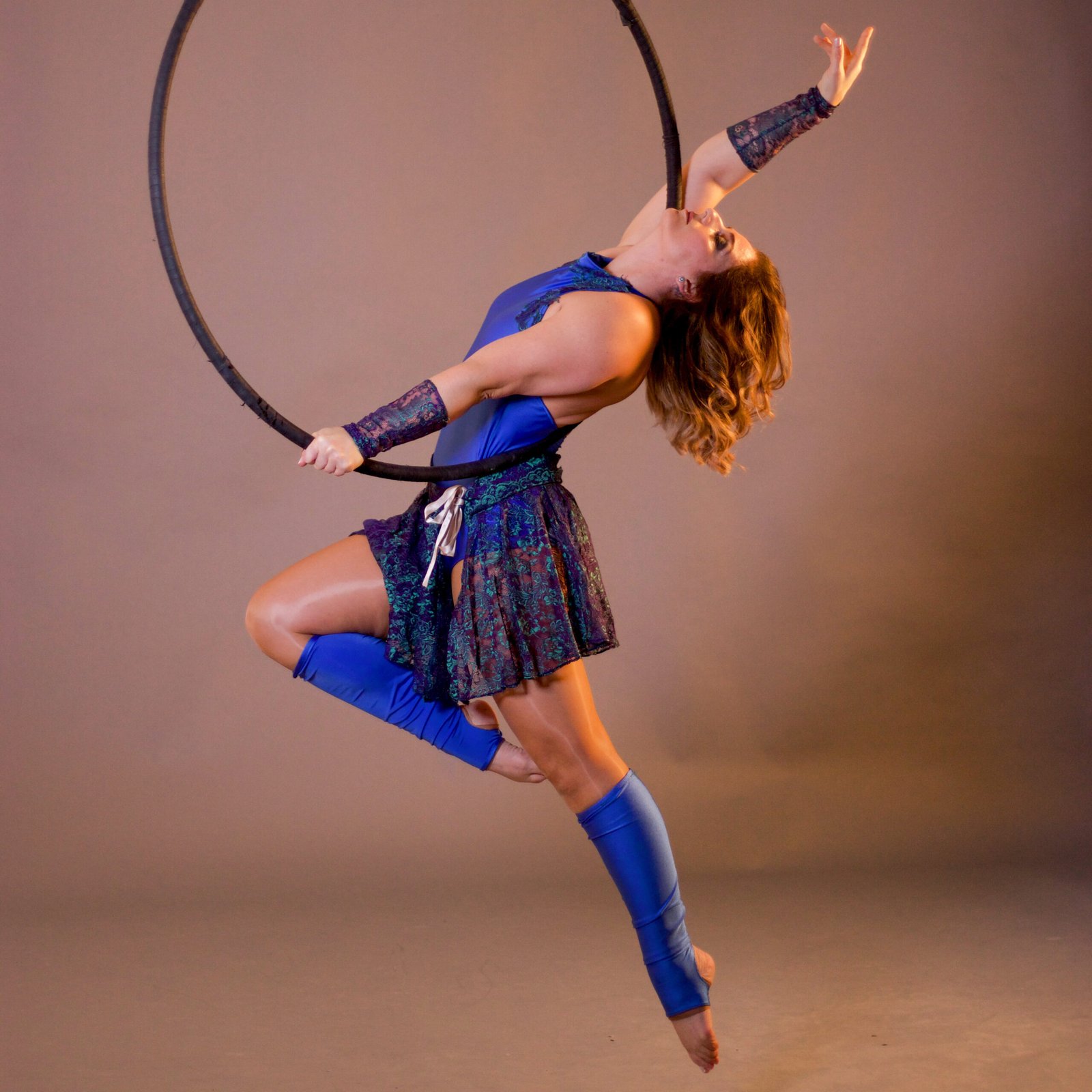
Aerial hoop and silks make strength visible: a hold either feels secure or it does not. Yet a move depends on more than the strength of one muscle. Timing, grip, shoulder control, body position and practice all affect the result. That is what makes aerial training such a useful lens for thinking about strength.
Strength is specific to the task
Pulling a dumbbell and climbing fabric both use your upper body, but the grip, body position and skill demands differ. General strength work can build a foundation. Practice on the apparatus teaches you how to apply it. If a move feels hard, ask which part fails first: the entry, grip, shoulder position, transition or endurance. The answer guides practice better than repeating the full move to exhaustion.
Progress happens in smaller steps
A controlled assisted hold may lead to a longer hold, then a cleaner transition. In the gym, the same principle could be an elevated push-up before a lower one, or a supported pull before an unassisted rep. The 2026 ACSM resistance training review supports progressive strength work through many methods. A more demanding version is useful once the current one is controlled; there is no prize for skipping steps.
Recovery belongs in the plan
Aerial practice loads the hands, shoulders and sometimes the skin in ways that a gym session does not. More attempts are not always better practice, especially after form begins to break down. A prospective study of circus students recorded shoulder, lower back, wrist and ankle complaints, but its small student sample does not tell an individual their injury risk. It does underline the value of taking pain and training load seriously.
- Practice technical skills when you are fresh enough to control them.
- Use easier versions to accumulate good repetitions.
- Build pulling, pushing, legs and trunk strength away from the apparatus.
- Count aerial classes and hangs as training load when planning gym work.
The lesson that carries over
Strength is something you can build and use, not just a number on a machine. Practice the movement you care about, strengthen the parts that support it, and leave room to recover. If you have an injury or new pain, work with an appropriate clinician and instructor on the return to demanding skills.